

One Verse from Each Surah: Reflections from Suratu Al-Tawbah
This week, in our journey through “One Verse from Each Surah,” we reflect on Suratu Al-Tawbah, a Surah that speaks deeply about faith, sacrifice, perseverance, and trust in Allah. From the sacrifices of the early believers to the powerful example of the Prophet ﷺ and Abu Bakr رضي الله عنه during the Hijrah, Suratu Al-Tawbah reminds us that true faith is demonstrated not only through what we give, but through what we are willing to sacrifice for the sake of Allah.
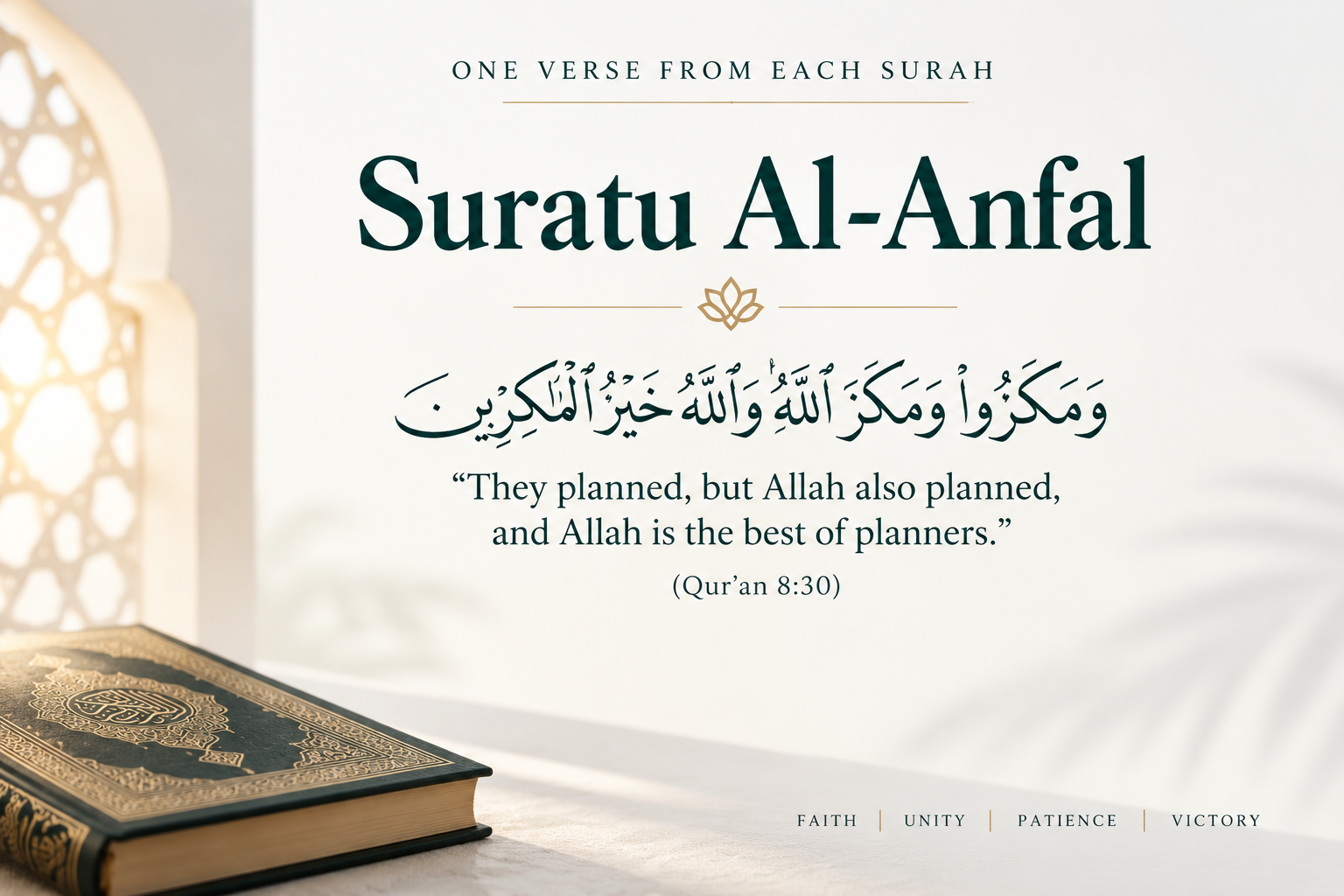
One Verse from Each Surah: Al-Anfal
“They planned, but Allah also planned, and Allah is the best of planners.” (Qur’an 8:30)
Suratu Al-Anfal reminds us that no matter how difficult our circumstances may seem, Allah’s plan is greater than any plan against us. Our role is to remain firm in faith, patient, united, and trusting in Allah.
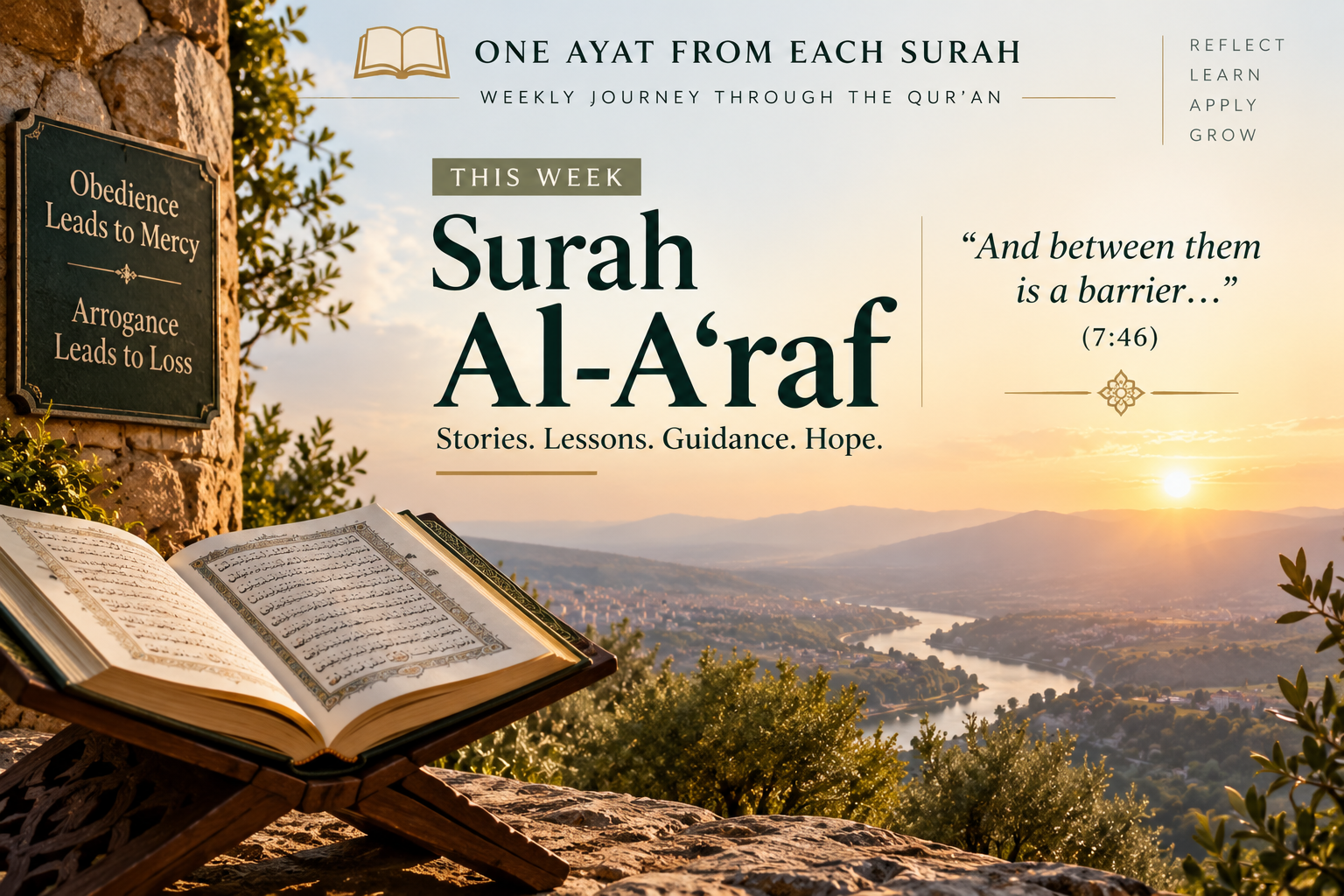
One Ayat from Each Surah
One Ayat from Each Surah: Surah Al-A‘raf
As we continue our weekly journey through the Qur’an, this week we turn to Surah Al-A‘raf. This Surah contains many powerful stories and lessons, including the story of Adam (AS) and Shaytan. One of its beautiful reminders is that while Shaytan leads us toward arrogance and disobedience, Allah always leaves the door of repentance and mercy open. In this week’s reflection, we look at one ayah from Surah Al-A‘raf and the lessons it offers for our lives today.
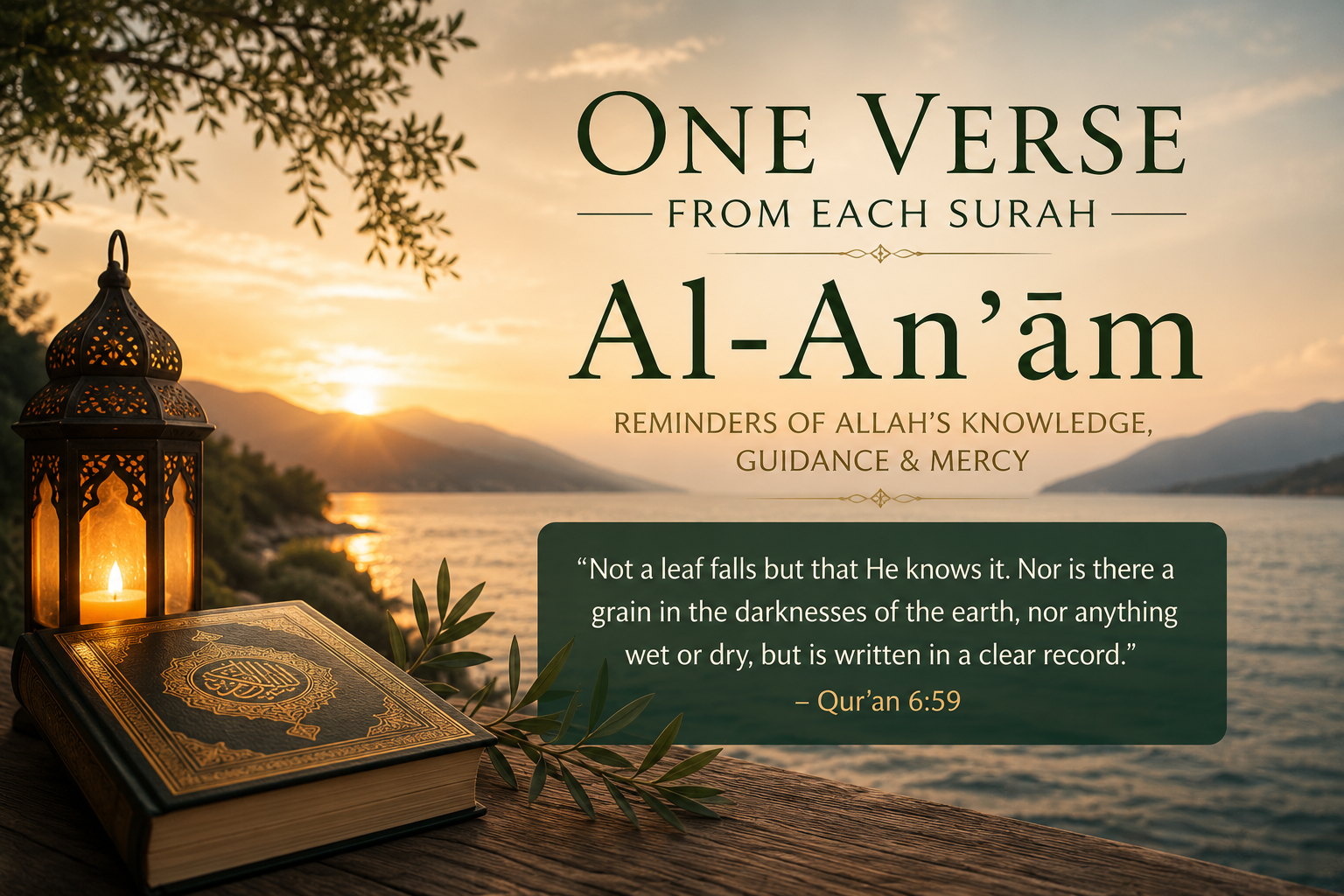
One Verse from Each Surah – Al-An‘ām
Surah Al-An‘ām reminds us of Allah’s perfect knowledge, guidance, and mercy. In Ayah 59, Allah reminds us that nothing is hidden from Him—not even a falling leaf. Ayah 125 teaches us to seek Allah’s guidance and ask Him to keep our hearts firm. And Ayah 160 gives us hope: every good deed can be rewarded tenfold.
May Allah guide our hearts, accept our good deeds, and forgive our shortcomings. Ameen.
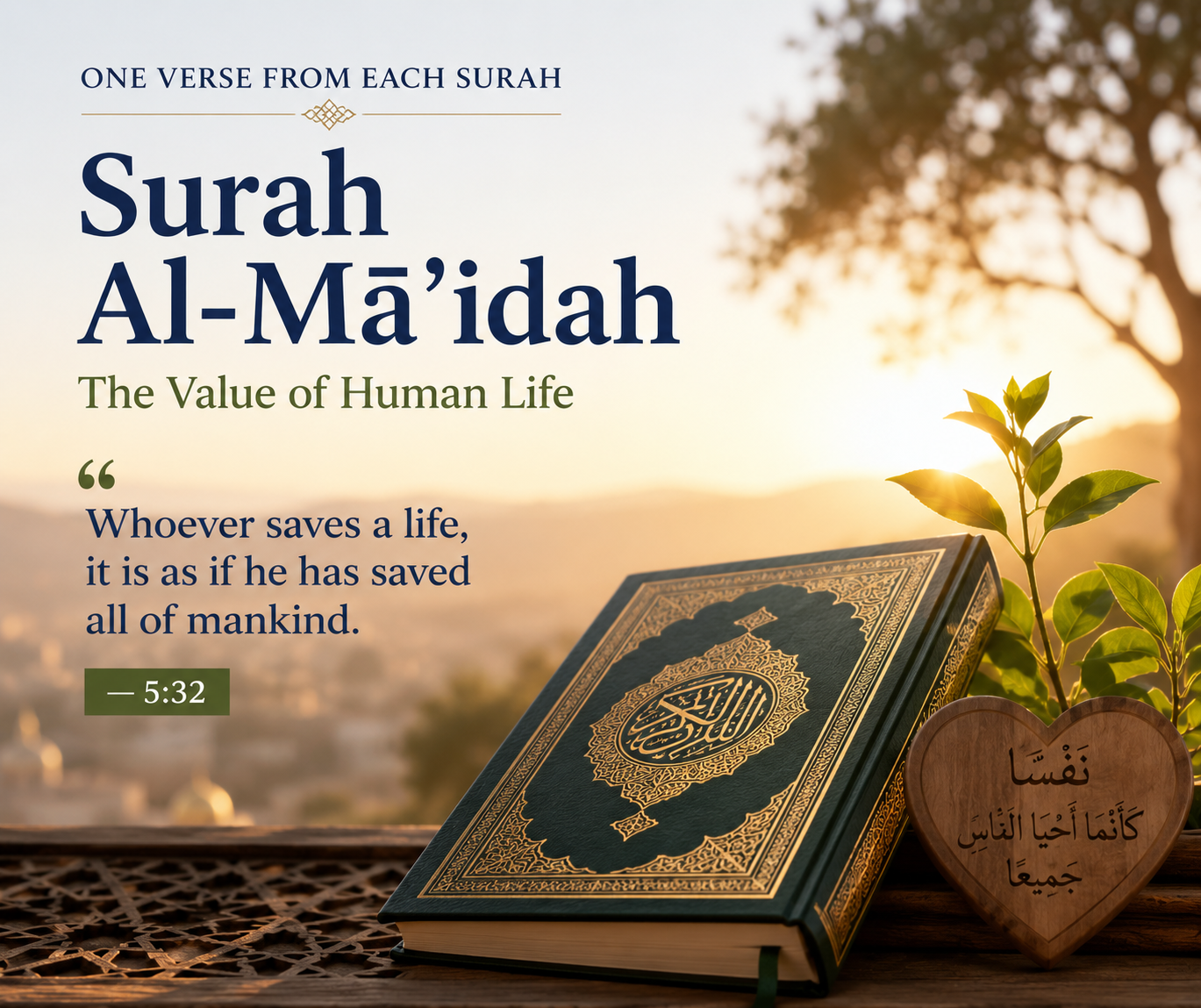
Surah Al-Mā’idah — The Value of Human Life
One Verse from Each Surah — Surah Al-Mā’idah
Surah Al-Mā’idah teaches us about halal, justice, and the value of human life. Allah reminds us:
“Whoever saves a life, it is as if he has saved all of mankind.”
— Surah Al-Mā’idah 5:32
May Allah guide us to protect life, uphold justice, and be a source of goodness. Ameen.
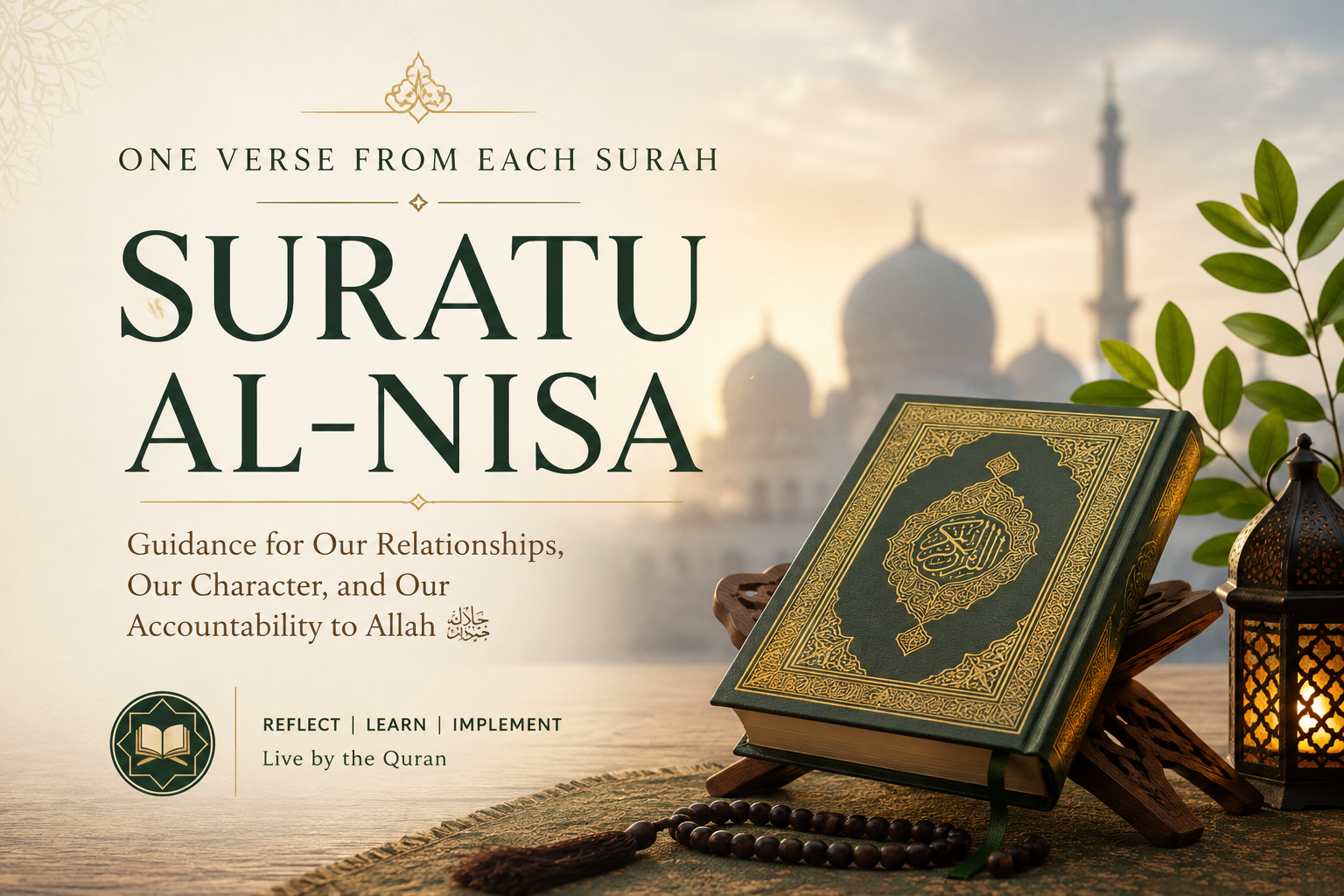
One Verse from Each Surah: Suratu Al-Nisa
Suratu Al-Nisa offers profound guidance on Taqwa, family relationships, human responsibility, and the dangers of hypocrisy. In this reflection, we look at two powerful verses that remind us of our connection to one another and the importance of sincerity before Allah.
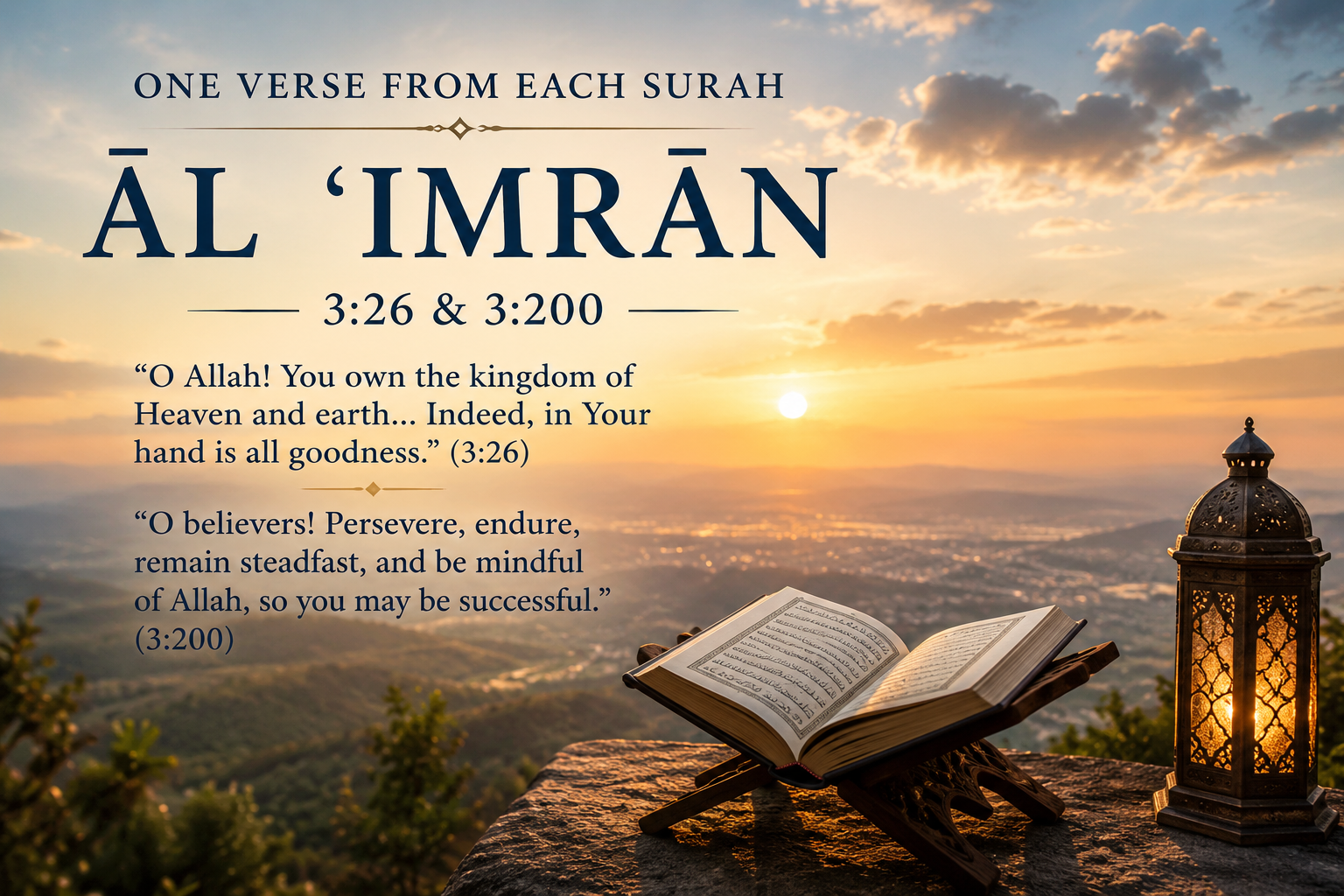
One Verse from Each Surah — Āl ʿImrān
Allah owns all authority and gives it to whom He wills. Our responsibility is to use whatever He entrusts to us with patience, perseverance, and taqwā. Success comes not simply through power, but through steadfastness and reliance on Allah. May Allah increase our īmān, grant us patience and wisdom, and bless us with success in this life and Jannatul-Firdaws in the Hereafter. Ameen.
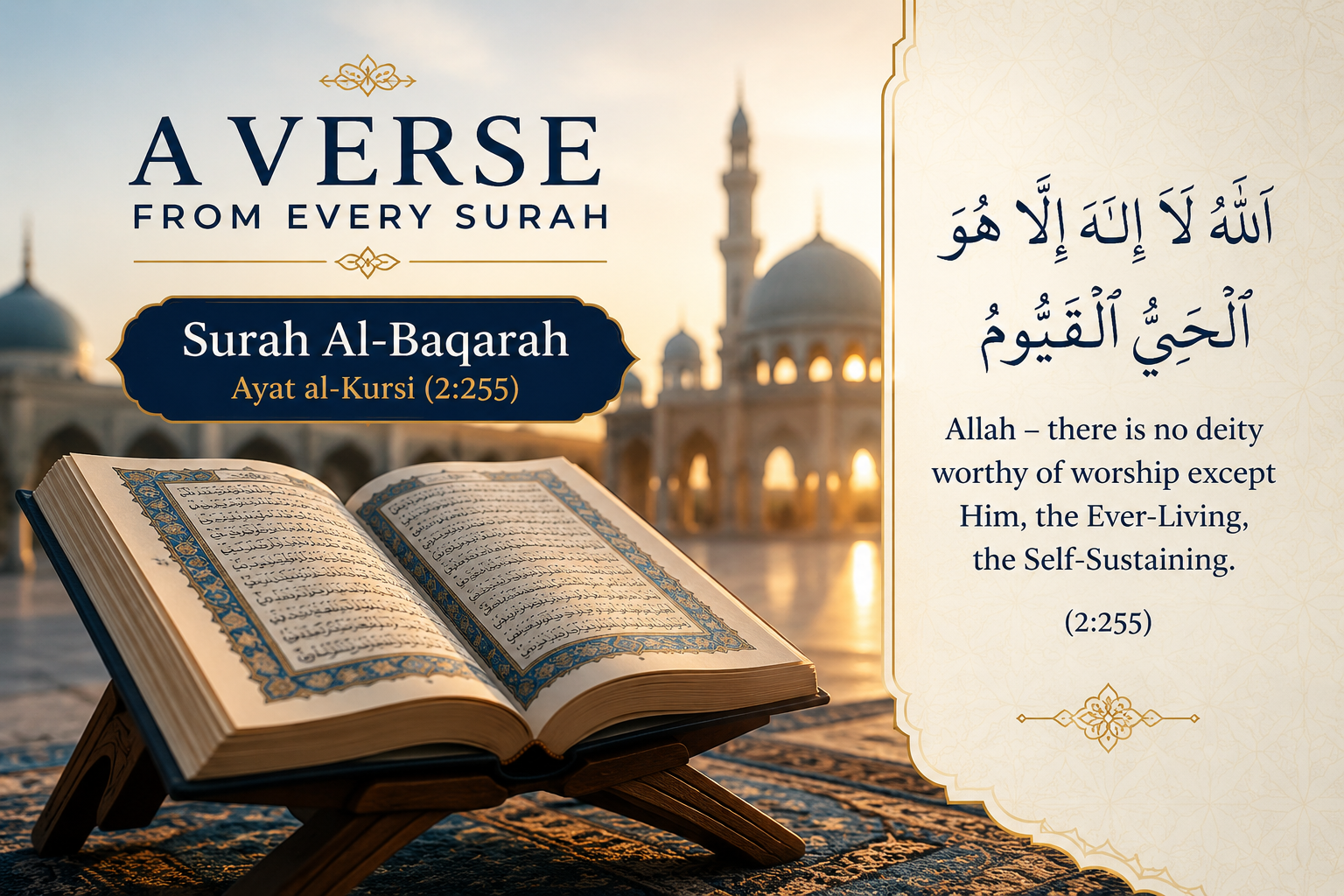
A Verse from Every Surah – Part 2: Reflections on Surah Al-Baqarah
Surah Al-Baqarah, the longest chapter of the Qur'an, covers a wide range of topics, including faith, worship, history, and guidance for personal and community life. Because of its depth and richness, choosing just one verse is no easy task. This week, the focus is on Ayat al-Kursi (2:255), the greatest verse in the Qur'an, which beautifully describes Allah as Al-Ḥayy (The Ever-Living) and Al-Qayyūm (The Self-Sustaining).
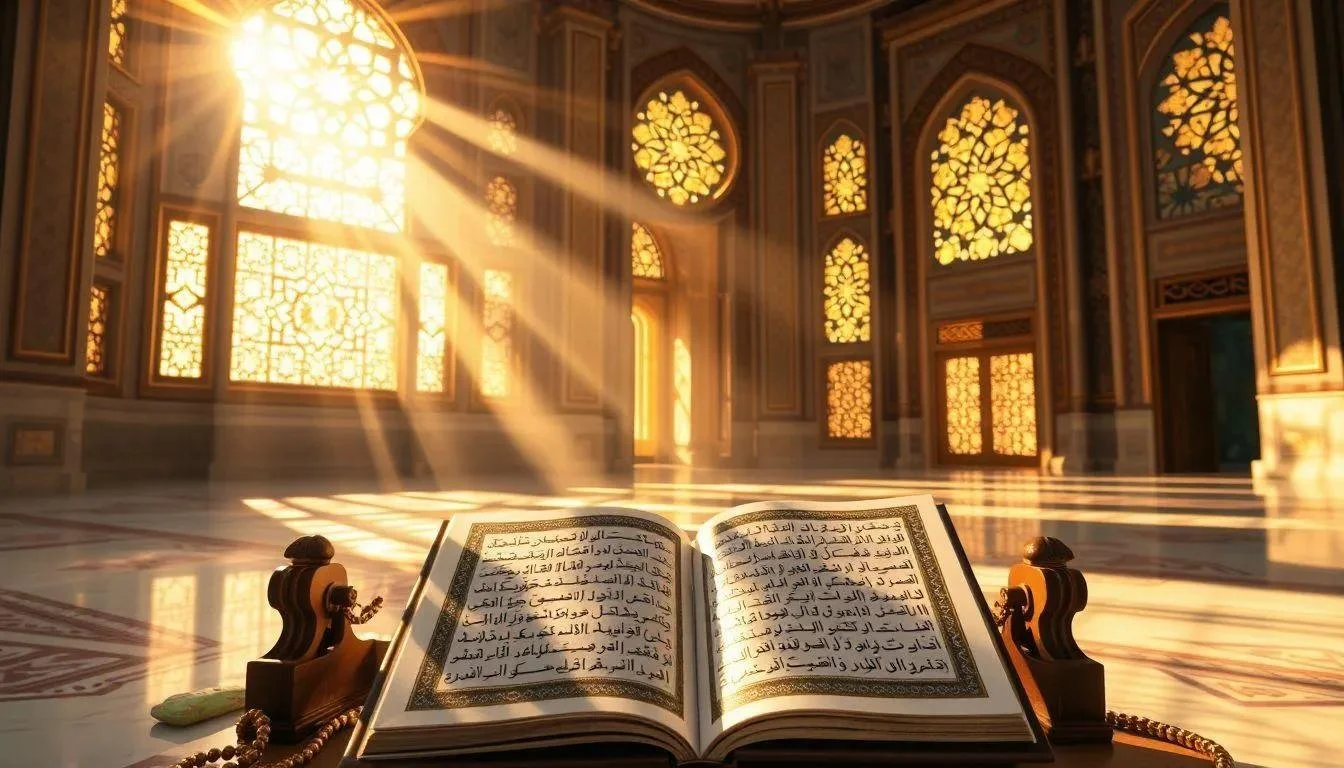
One Verse from Every Surah of the Holy Qur'an
Every verse of the Qur'an carries timeless wisdom. In this new series, I reflect on one meaningful verse from each surah, beginning with Surah Al-Fātiḥah and its powerful prayer: "Guide us to the Straight Path." I invite you to read and reflect with me.
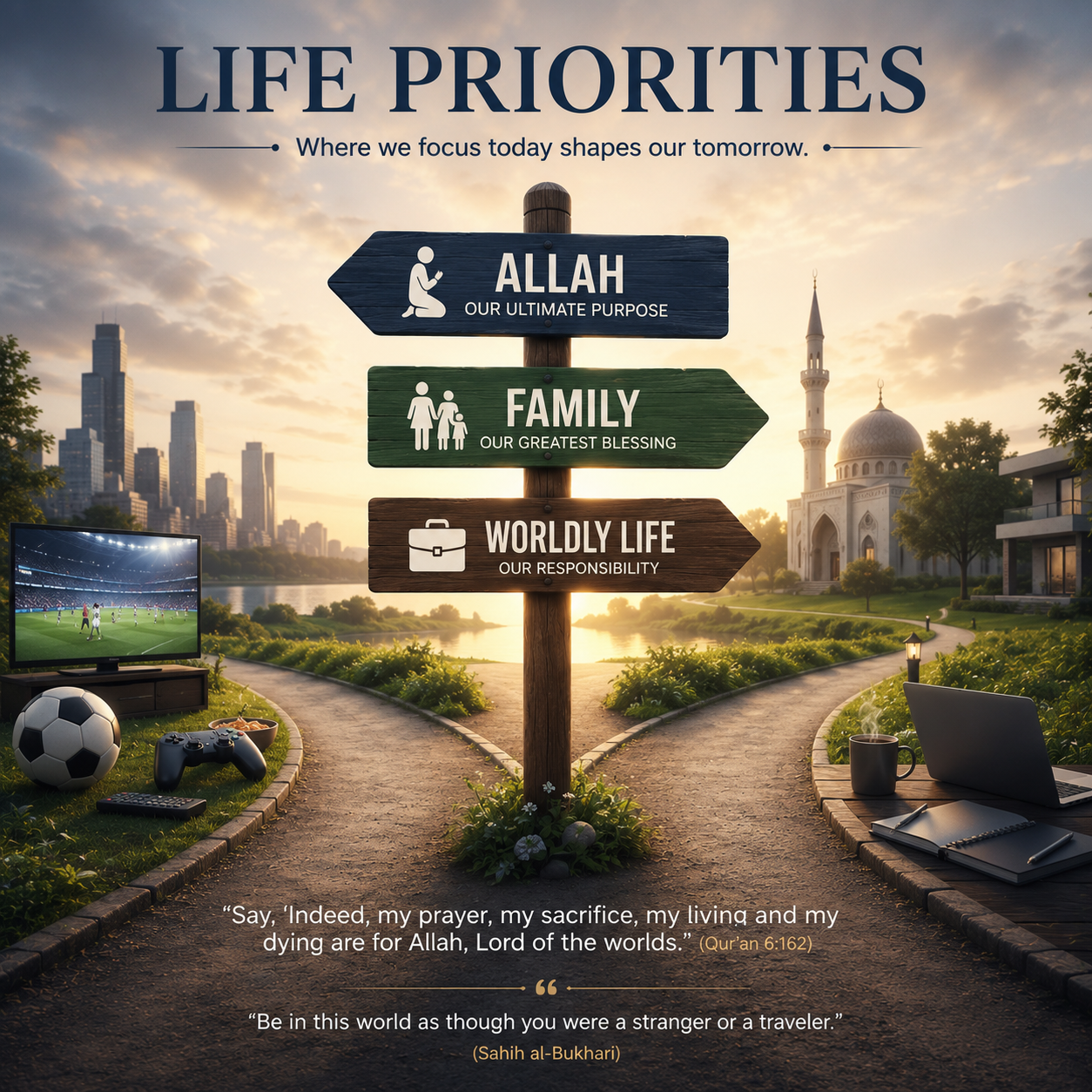
The Priorities That Matter Most
What truly comes first in our lives? Our daily choices reveal our priorities more clearly than our words. This reflection invites us to examine where our hearts are invested and to realign our lives with what matters most—our relationship with Allah.
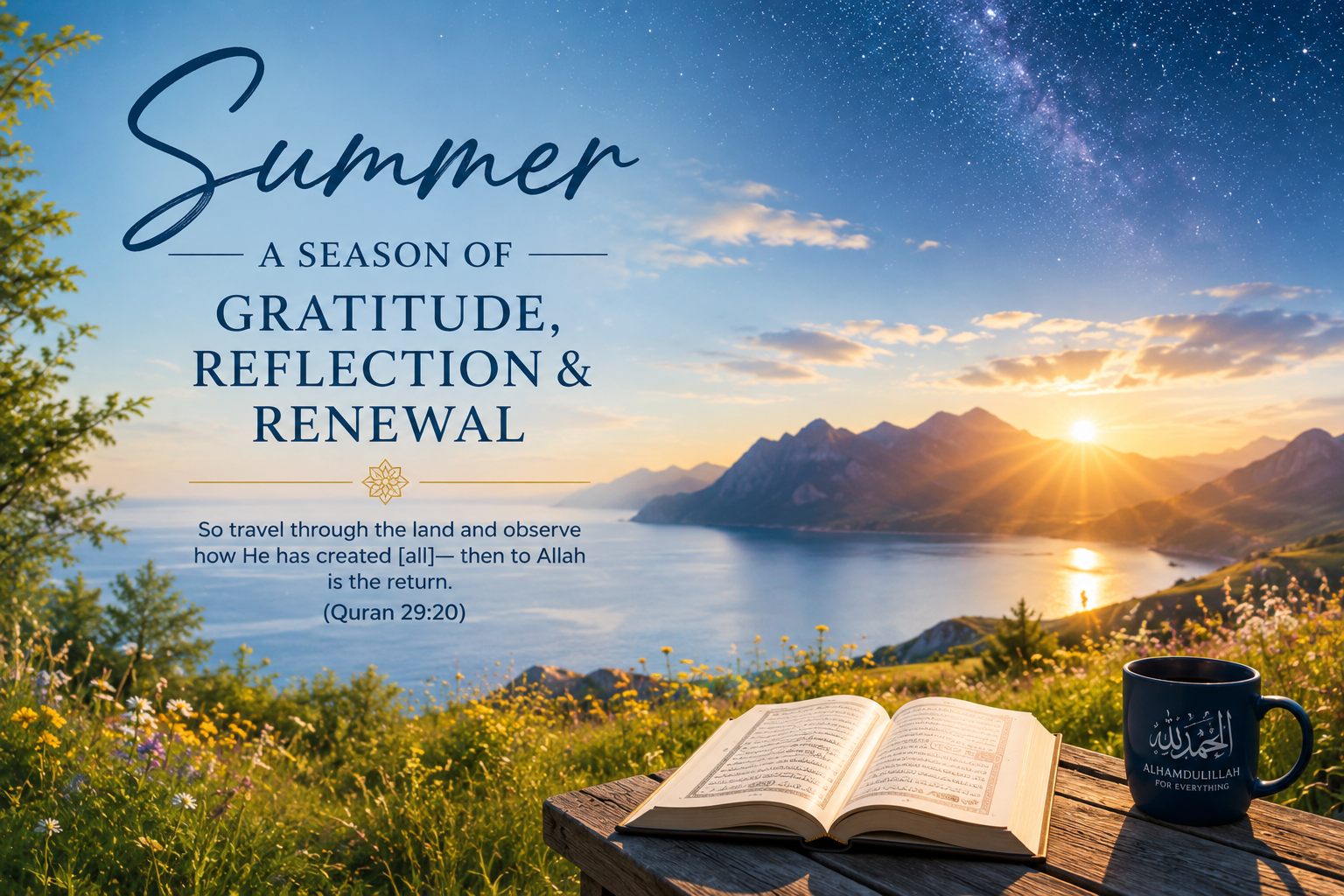
The Summer Break: A Season for Reflection and Renewal
Summer invites us to travel, breathe fresh air, and witness the beauty of Allah’s creation—from mountains and oceans to the stars of a clear night. It is a season not only for enjoyment, but for reflection, gratitude, and reconnecting with family and friends. May Allah place barakah in our time and bless our summer with peace and renewal. Ameen.

Manipulation of the Game: A Reflection on Justice and Integrity
Recent FIFA decisions, including the controversial calls in the Egypt–Argentina match, remind us how easily rules can be manipulated when power overshadows fairness. When justice becomes selective, trust erodes — whether in sports or global institutions. Allah commands us to stand firmly for justice (Qur’an 4:135), and the Prophet ﷺ taught that true strength lies in integrity, not dominance. May Allah guide us to uphold what is right.
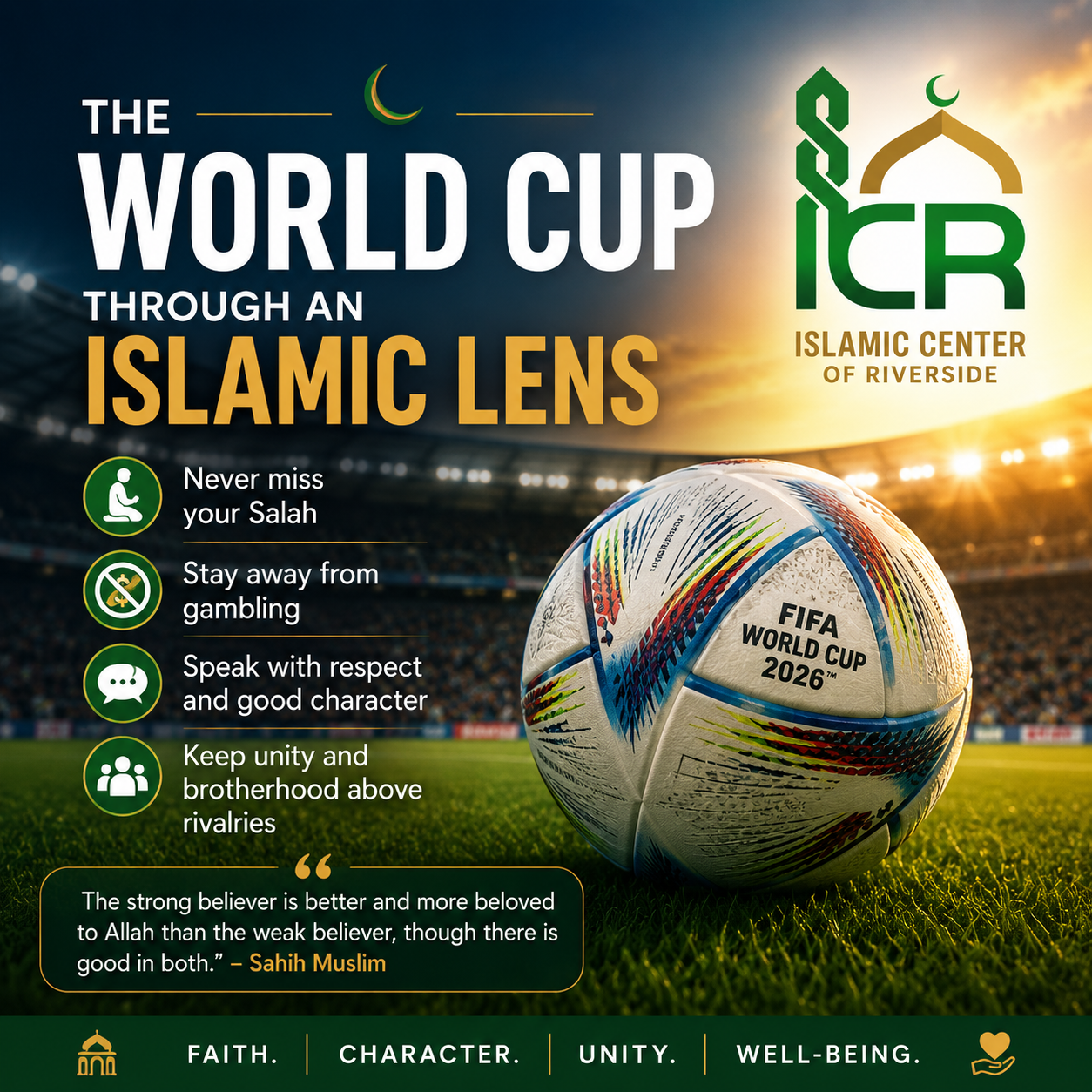
The World Cup Through an Islamic Lens
The FIFA World Cup is a celebration of athletic excellence that Muslims can enjoy while remaining true to the teachings of Islam. As we cheer for our favorite teams, let us never neglect our prayers, compromise our character, or forget that true success lies in earning the pleasure of Allah.
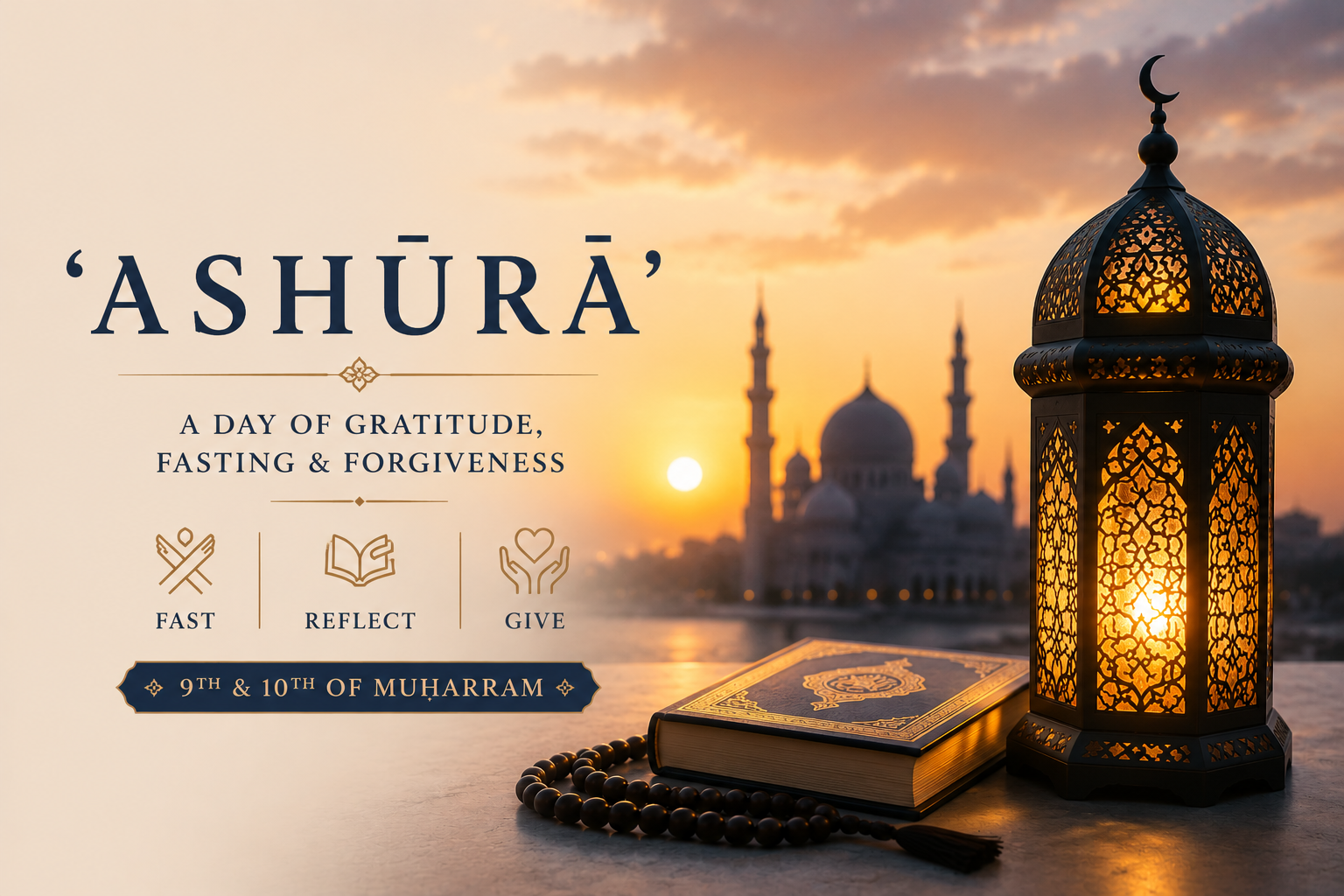
ʿĀshūrā’: A Day of Gratitude, Reflection, and Renewal
As the blessed days of Muḥarram continue, let us revive the Sunnah of fasting on the 9th and 10th of Muḥarram. The Prophet ﷺ taught that fasting on ʿĀshūrā’ is a means for Allah to forgive the minor sins of the previous year. Let this be a day of gratitude, repentance, and drawing closer to Allah.
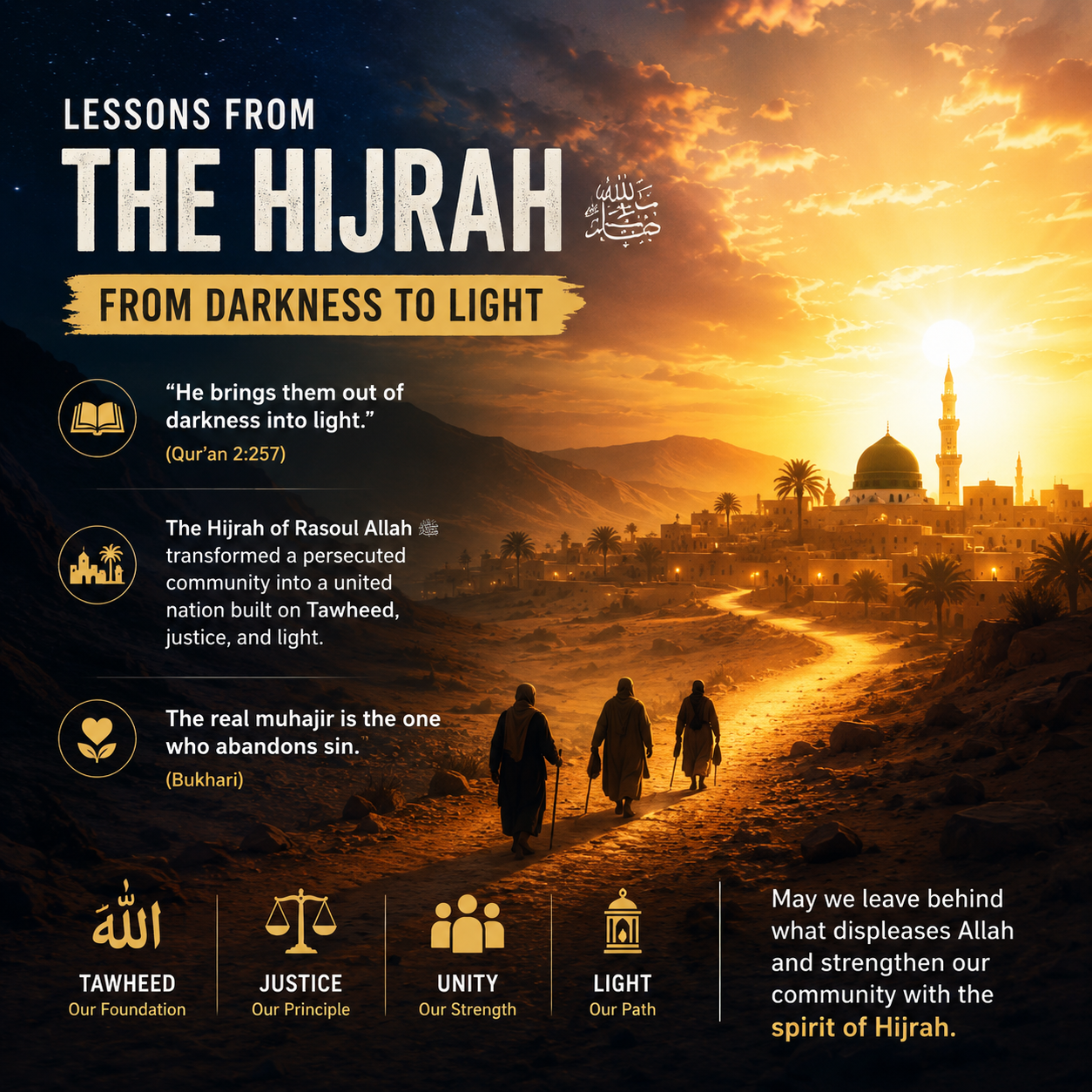
The Light of Hijrah: A Turning Point for Humanity
The Hijrah of Rasoul Allah ﷺ was a turning point for humanity—transforming a persecuted community into a united nation built on Tawheed, justice, and light. As Allah reminds us, “He brings them out of darkness into light” (Qur’an 2:257). The Prophet’s migration established a prophetic society in Madinah, teaching us that true Hijrah is to leave behind what displeases Allah, as he ﷺ said: “The real muhajir is the one who abandons sin” (Bukhari). May we carry these lessons into our lives and strengthen our community with the spirit of Hijrah.
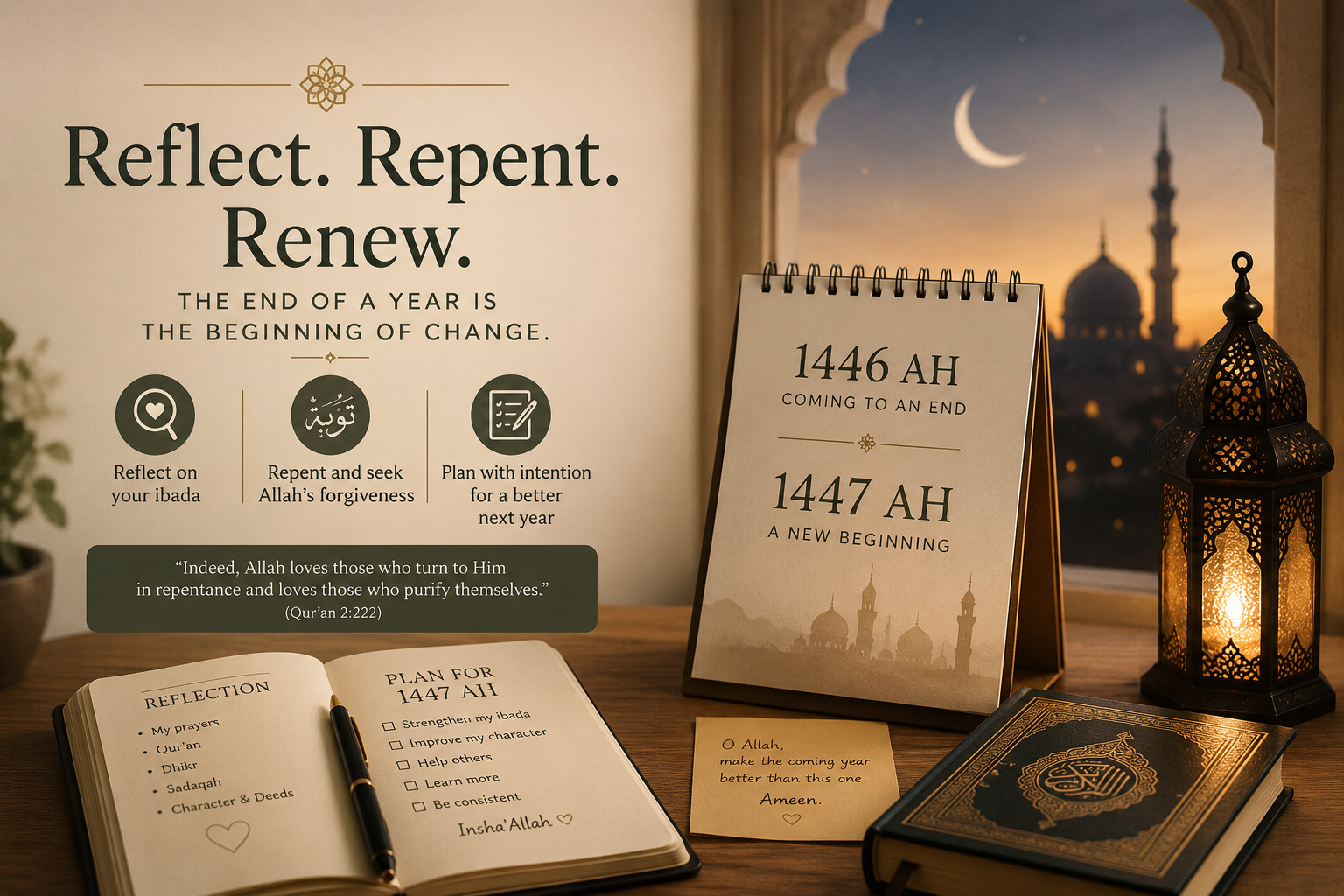
Reflecting Before the Year Ends
As the Hijri year comes to a close, we are reminded to pause and look inward. A full year of life has passed—did we honor our prayers, fulfill our Zakah, complete our fasting, and stay connected to the Qur’an? If we fell short, this moment is a mercy from Allah, inviting us to return to Him with sincere repentance and renewed intention. The new year is an opportunity to rebuild our spiritual habits, strengthen our worship, and commit to a clearer, more purposeful path toward Allah.
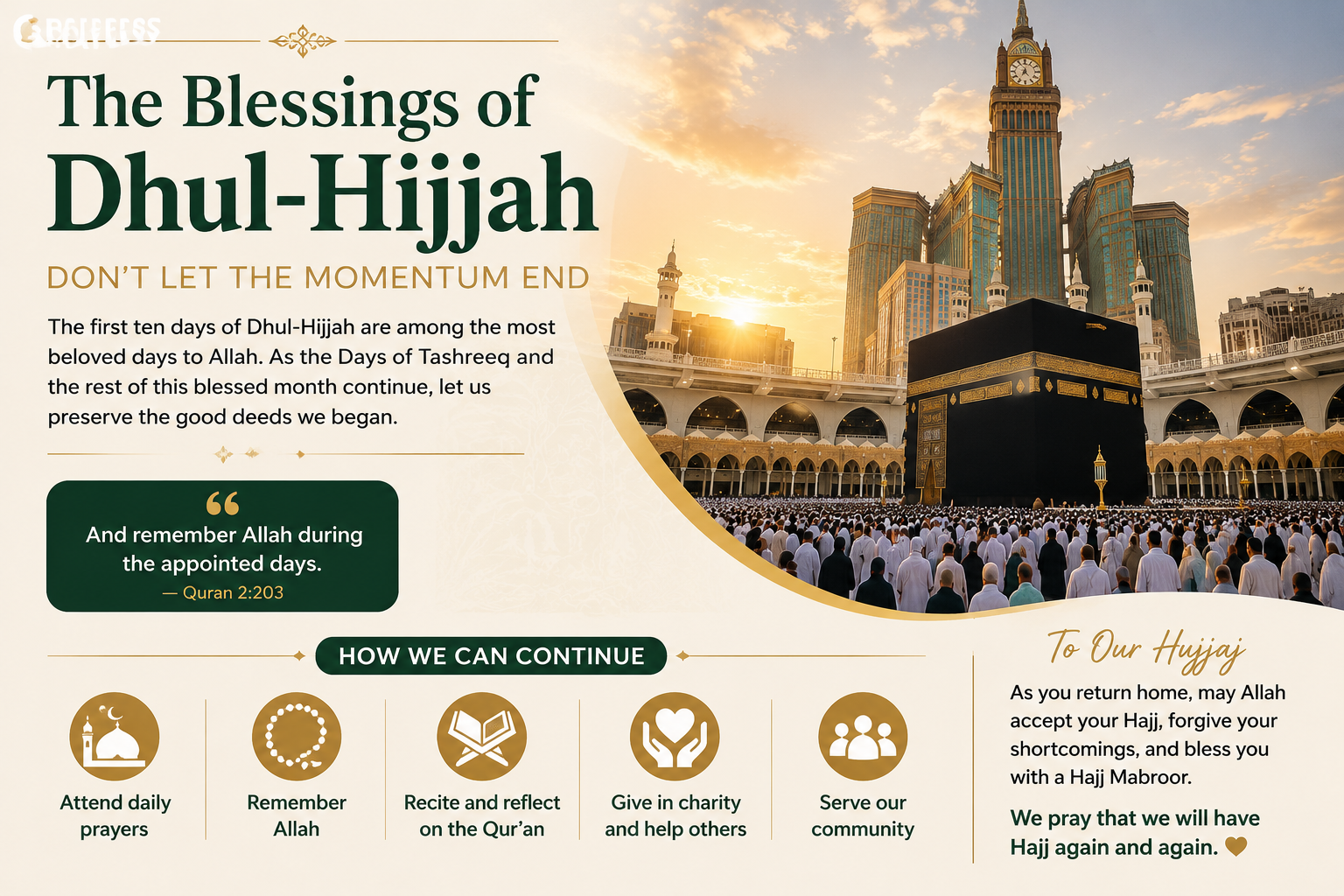
Preserving the Spirit of Dhul-Hijjah After Hajj
The blessed days of Dhul-Hijjah may be ending, but their impact on our hearts should continue. As the hujjaj return home, we are reminded to preserve our good deeds through prayer, remembrance of Allah, and service to others, carrying the spirit of these sacred days throughout the year.
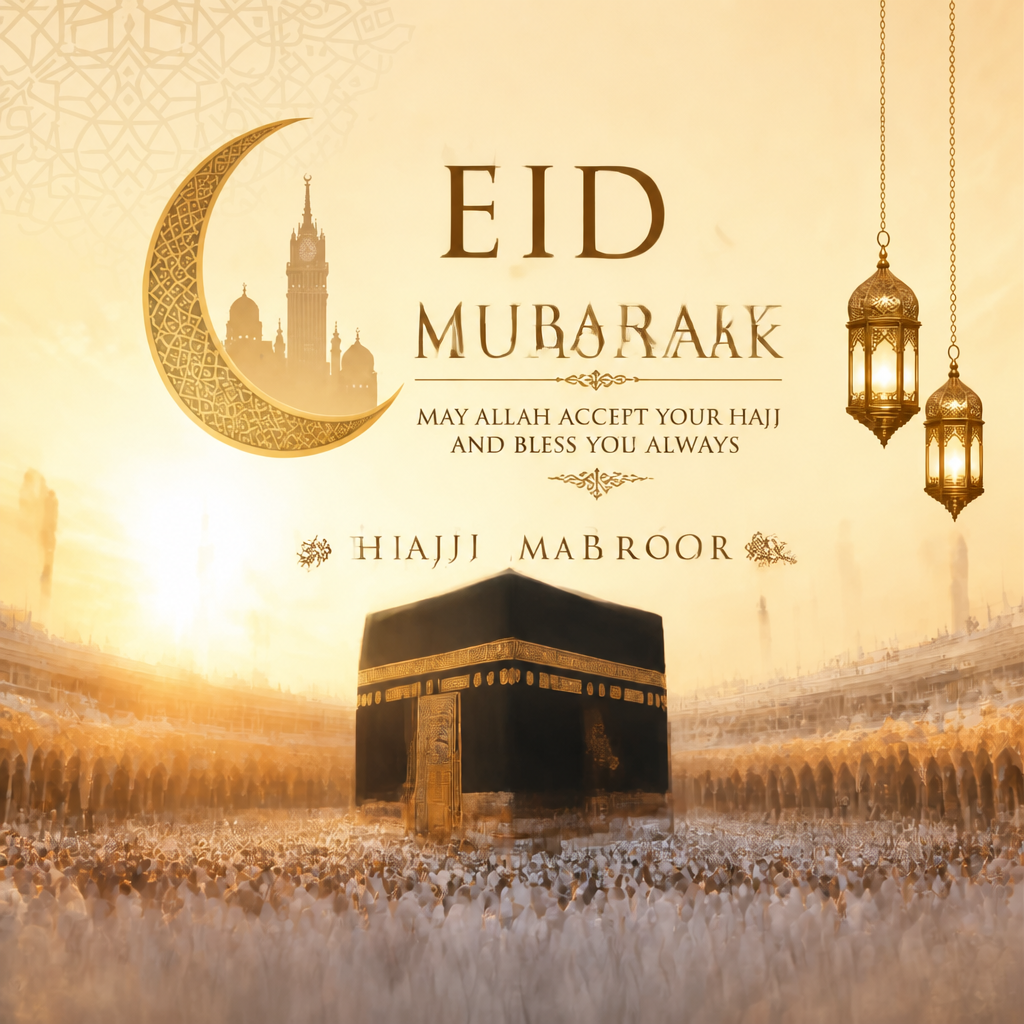
Eid Mubārak - Hajj 2026 / 1447
Eid Mubārak. May Allah accept the Hajj of all who stood on ʿArafah and bless our community with safety, mercy, and joy. These sacred days remind us to stay grateful, stay vigilant, and stay generous — giving to those in need and spreading kindness to everyone around us. May Allah accept our worship and good deeds.
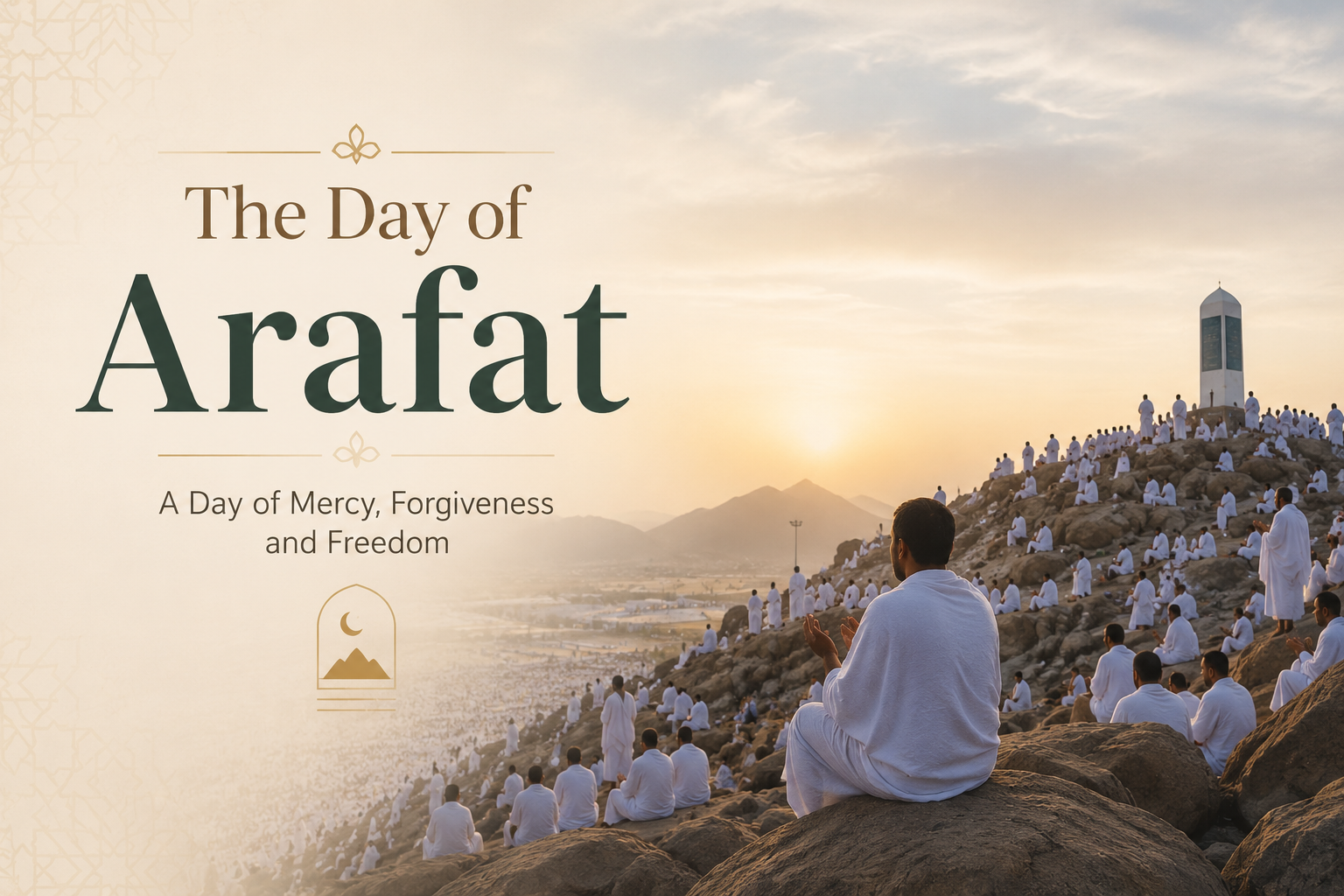
Arafah Reflections & Recent Tragedy (4 of 5)
As the blessed days of Dhul‑Hijjah begin, our hearts turn toward ʿArafah—the day when Allah’s mercy pours upon the Ummah—while we also grieve the recent tragedy in San Diego and pray for protection, healing, and steadfastness. Ameen.
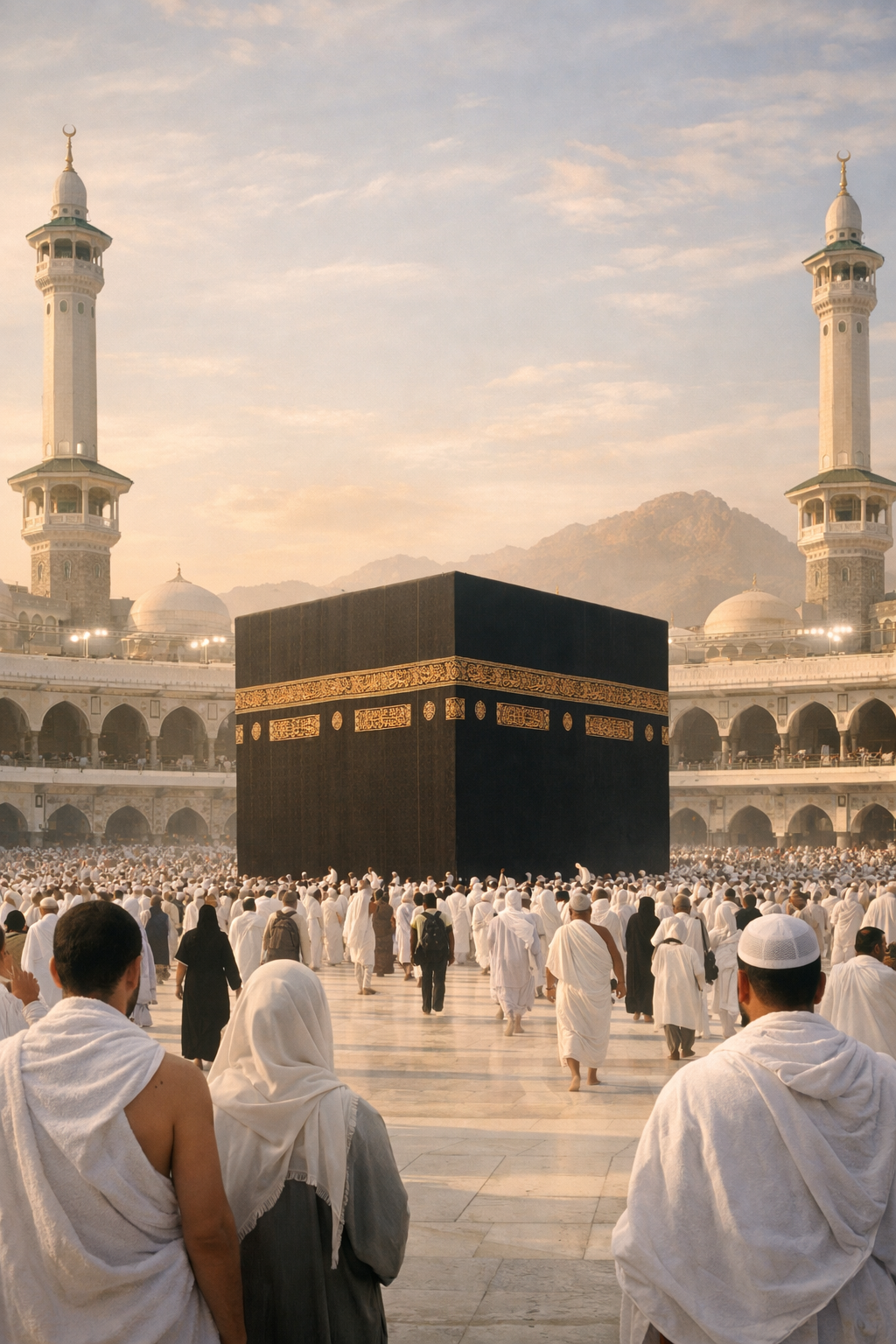
The Day Allah Completed the Religion
The Day of ʿArafah is more than a moment in Hajj — it is the day Allah completed our religion and perfected His favor upon this Ummah. As the Prophet ﷺ stood on Jabal al‑Raḥmah, a divine message was revealed that would seal the guidance of Islam for all generations to come.